New Patient? Complete your intake form online before your visit and save time at check-in. Complete Intake Form

Pediatric Vision · 4 min read · Apr 6, 2026

Signs Your Child
May Need Glasses

Children rarely complain about vision problems because they assume everyone sees the world the same way they do. They adapt — squinting, sitting closer, avoiding reading — without realizing these behaviors are compensating for a vision problem that's affecting their development.

Kids Have No
Reference Point

Unlike adults, children have no reference point for clear vision. If a child has always seen blurry text on a chalkboard, they simply believe that's what the world looks like. Parents and teachers are typically the first to recognize the compensatory behaviors that signal a vision problem — not the child themselves.

Squinting or Closing One Eye A classic sign of myopia or astigmatism — squinting creates a temporary pinhole effect.
Sitting Close to Screens Holding books or devices close, or sitting near the TV, suggests nearsightedness.
One Eye Turning In or Out Potential strabismus — warrants immediate evaluation.
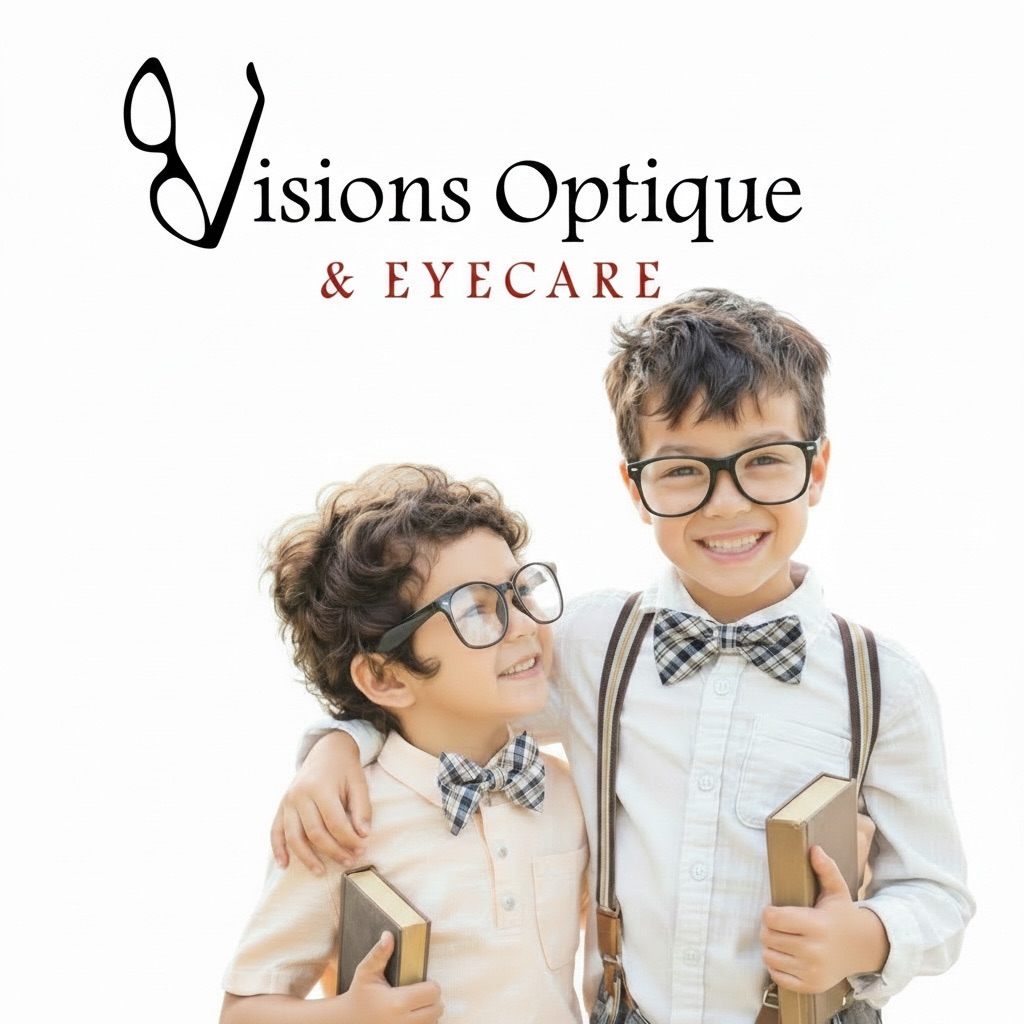
Two children smiling in eyeglasses, holding books — pediatric vision care at Visions Optique & Eyecare, North Scottsdale

What to Watch For

Squinting or closing one eye — a classic sign of myopia or astigmatism; squinting creates a pinhole effect that temporarily sharpens a blurry image. Frequent head tilting — may indicate a muscle imbalance or astigmatism with a significant axis. Sitting very close to screens or holding them close — suggests nearsightedness. Excessive eye rubbing — can signal focusing fatigue or chronic eye strain. One eye turning inward or outward — potential strabismus; warrants immediate evaluation.

Frequently losing their place while reading, using a finger to track words across the page, avoiding reading, drawing, or close-up activities, headaches especially after school, short attention span on near-vision tasks, and declining grades despite adequate effort.

The American Optometric Association recommends eye exams at: 6 months (first exam to check alignment and refractive error), age 3 (visual development and amblyopia screening), before kindergarten (uncorrected vision is a leading cause of learning difficulties), and annually thereafter.

Children do not need to know the alphabet to have their vision tested. Pediatric optometrists use picture charts, matching games, and objective testing that requires no verbal response. Our clinic is calm and welcoming for children of all ages — from infants through teenagers. The earlier amblyopia (lazy eye) or strabismus is caught, the more effective treatment becomes. The visual system is most responsive to treatment before age 8.

Put This Into Practice

Ready to Book a Pediatric Exam?

Learn more about our pediatric eye care & myopia management, or call or text us to schedule.

Pediatric Eye Care Book an Appointment