Digital Health · 6 min read · Nov 19, 2026
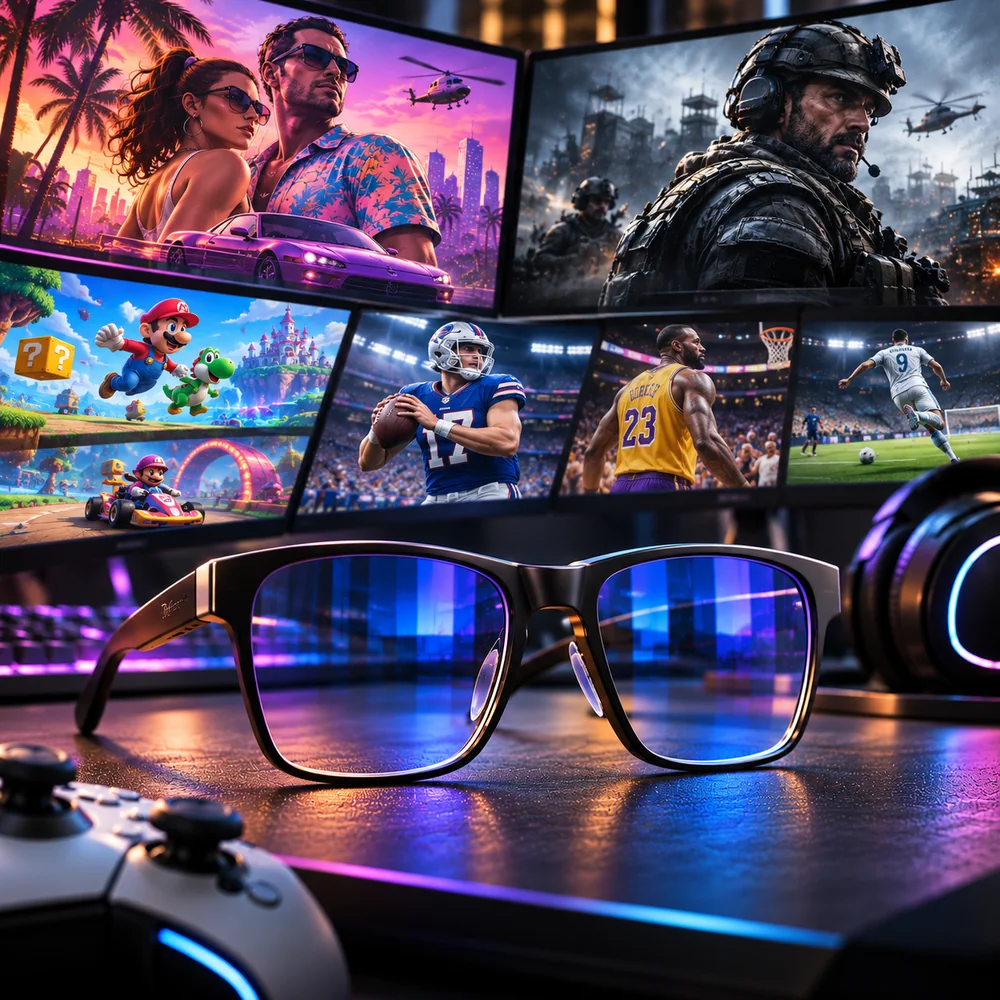
This holiday season is stacked. Grand Theft Auto VI, the biggest launch of the year, arrived November 19 for adult players, less than a month after Call of Duty: Modern Warfare 4 hit on October 23. Younger players are just as busy: The Legend of Zelda: Ocarina of Time landed on Nintendo Switch 2 on November 5, Pikmin 4's Switch 2 Edition and Barbie Rewind followed on November 12, and Professor Layton and the New World of Steam arrives December 10, all on top of everyday favorites like Roblox, Minecraft, and Fortnite. Translation: more screen time for the whole family. If eyes feel tired, dry, or blurry after a marathon session, you're not imagining it. The good news is that gaming eye strain is temporary and very preventable. Here's what really causes it, which gaming glasses and lens coatings genuinely help, and the honest truth about blue light glasses.
Why Your Eyes Get Tired
Gaming eye strain is a form of what the American Optometric Association calls computer vision syndrome. Screens are simply harder on the eyes than a printed page: lower contrast, more glare and reflections, and viewing distances your eyes aren't used to holding for hours. The AOA notes that gamers often play for up to three hours at a stretch, usually with less than a 15-minute break, if any, and its gamer survey found eye strain, headaches, blurred vision, and dry eyes were worse among people who played longer than three hours. Gamers in that survey also reported more symptoms from smartphone play than from other devices. Whether it's GTA 6 or Pikmin, none of this means a game damages your eyes. It means long, unbroken sessions wear them out, and a few smart changes make a big difference.
In This Article
It can make them feel pretty miserable, but it won't permanently damage them. The American Optometric Association describes digital eye strain as eyestrain, headaches, blurred vision, and dry eyes that tend to get worse the longer a screen session runs, and its research found symptoms were worse for gamers who played more than three hours at a time. The same survey found gamers spend, on average, more than eight hours a day on handheld devices, over four of them gaming. That's a lot of uninterrupted focus.
The key word is temporary. Eye strain eases with rest, and it's very preventable with breaks, a better screen setup, and the right lenses. If symptoms stick around even after you've stepped away, that's a good reason to book an eye exam. For a deeper look at screens in everyday life, see our guide to digital eye strain and blue light.
Here's the honest answer: not the way most ads suggest. Cleveland Clinic notes that blue light from normal screen use hasn't been shown to cause lasting eye damage (the sun is a far bigger source of blue light than any monitor), and the American Academy of Ophthalmology does not recommend blue-light-blocking glasses specifically for digital eye strain. The real culprits are blinking less and focusing up close for a long time. Any glare relief people notice usually comes from the lens tint or anti-reflective coating, not the blue-light filtering itself. The American Optometric Association is a bit more open to blue-light tints and coatings, but there still aren't controlled studies showing they prevent eye strain.
Where blue-light lenses may help is sleep. Cleveland Clinic points to some preliminary evidence that wearing them in the evening can make it easier for some people to fall asleep, though limiting screens before bed works just as well. So think of blue-light filtering as an optional comfort add-on some players like, not a medical fix. The upgrades that really pull their weight are an accurate prescription and an anti-reflective coating to cut screen glare.
Younger players have plenty to unwrap this year. The Legend of Zelda: Ocarina of Time on Nintendo Switch 2, Pikmin 4's Switch 2 Edition with its new Dandori Academy, Barbie Rewind, and Professor Layton and the New World of Steam are all landing this holiday season, joining year-round favorites Roblox, Minecraft, and Fortnite. Sports games like Madden NFL 27 and EA Sports FC 27 keep plenty of families competing on game night, too. Whatever's on screen, the same eye-care basics apply: regular breaks, a comfortable distance from the TV, tablet, or handheld, and a prescription that's up to date. Kids often won't mention blurry vision or tired eyes, so watch for squinting, eye rubbing, headaches, or sitting very close to the screen.
For glasses, look for a well-fitting, durable frame (impact-resistant polycarbonate or Trivex lenses are a smart choice for active kids), an anti-reflective coating to reduce glare, and a prescription checked at a yearly exam. Our pediatric eye exams are a great place to start. One quick parental note: check the ESRB rating before buying any game, new releases included. The Grand Theft Auto and Call of Duty series are rated M (Mature 17+) and are made for adult players, not kids.
The rule is simple: every 20 minutes, look at something about 20 feet away for 20 seconds. It gives your focusing muscles a break and nudges you to blink. The American Optometric Association recommends it for gamers, along with a few other easy habits: stay hydrated, set a reminder to blink more, keep larger screens at least 20 inches away and handheld devices at least 13 inches away, keep room lighting close to your screen's brightness, and tilt the bottom of the screen slightly toward you to cut glare. For longer sessions, the AOA suggests a 15-minute break after two hours of continuous screen time, and stopping gaming at least an hour before bed.
Does it work mid-boss-fight? Yes, if you build it into natural pauses: loading screens, respawns, the end of a Pikmin day, halftime, or between matches. Cleveland Clinic also suggests artificial tears for dryness and bumping up font size or contrast so you're not squinting. Heading outside? Bright Arizona sun is a different story; see our guide to sunglasses and UV protection.
If you regularly get tired eyes, headaches, or blurry vision during or after playing, or you find yourself leaning toward the screen or squinting at on-screen text, it's time for an eye exam. The American Optometric Association calls a yearly in-person exam “by far the most important” step for gamers, and notes that lenses prescribed specifically for computer and screen distance can help, even for people who don't otherwise need glasses for everyday tasks.
At your visit, tell us how you play: console on a big TV, PC monitor, handheld, or phone, and how long your sessions usually run. That helps our doctors fine-tune your prescription for the distance you actually use. If you're looking for computer glasses in Scottsdale, our opticians can pair that prescription with an anti-reflective coating and, if you like, a blue-light filter for comfort. Learn more about our comprehensive eye exams and custom lens options.
Game On, Comfortably
A comprehensive eye exam is the best first step for anyone who games, works, or studies on screens for hours. Our doctors can update your prescription for the distance you actually use, and our opticians can add anti-reflective coatings and other lens options that fit the way you play.